Ever walked up to your front door in the dark, fumbling for keys while wondering if someone’s watching? You’re not alone. Poor or missing home security lighting tips leave millions of homes vulnerable each year. As a licensed electrician who’s rewired everything from suburban ranches to downtown lofts, I’ve seen firsthand how the wrong bulb—or no bulb at all—can turn your porch into an invitation for trouble. In this guide, you’ll get actionable, tested advice to light your property like a pro, deter intruders, and never waste money on fixtures that look cool but do nothing.
Table of Contents
- Why Security Lighting Matters
- Step-by-Step Guide to Smart Lighting
- Best Practices for Maximum Protection
- Real-World Results & Case Studies
- Frequently Asked Questions
Key Takeaways
- Strategic placement beats brightness—light where threats hide, not just where you walk.
- Motion sensors reduce false triggers when calibrated correctly (yes, I learned this the hard way).
- LEDs save energy and last longer, but color temperature affects visibility and mood.
- Avoid “decorative-only” fixtures—they look great on Instagram but offer zero deterrence.
- Professional installation ensures code compliance and optimal performance.
Why Security Lighting Matters
Lighting isn’t just about seeing your mailbox—it’s about eliminating shadows where intruders lurk. According to the U.S. Department of Justice, nearly 60% of home burglaries occur during daylight hours, but poorly lit properties after dusk signal neglect and opportunity. I once installed a beautiful pendant light over a client’s side gate—only to realize it cast a deep shadow right under their basement window. Two weeks later, someone tried to pry it open. Lesson learned: aesthetics must serve function.
Step-by-Step Guide to Smart Lighting
1. Map Your Vulnerability Zones
Walk your property at night with a flashlight. Note dark corners near doors, windows, garages, and fence lines. These are priority zones—not your backyard gazebo.
2. Choose the Right Fixture Type
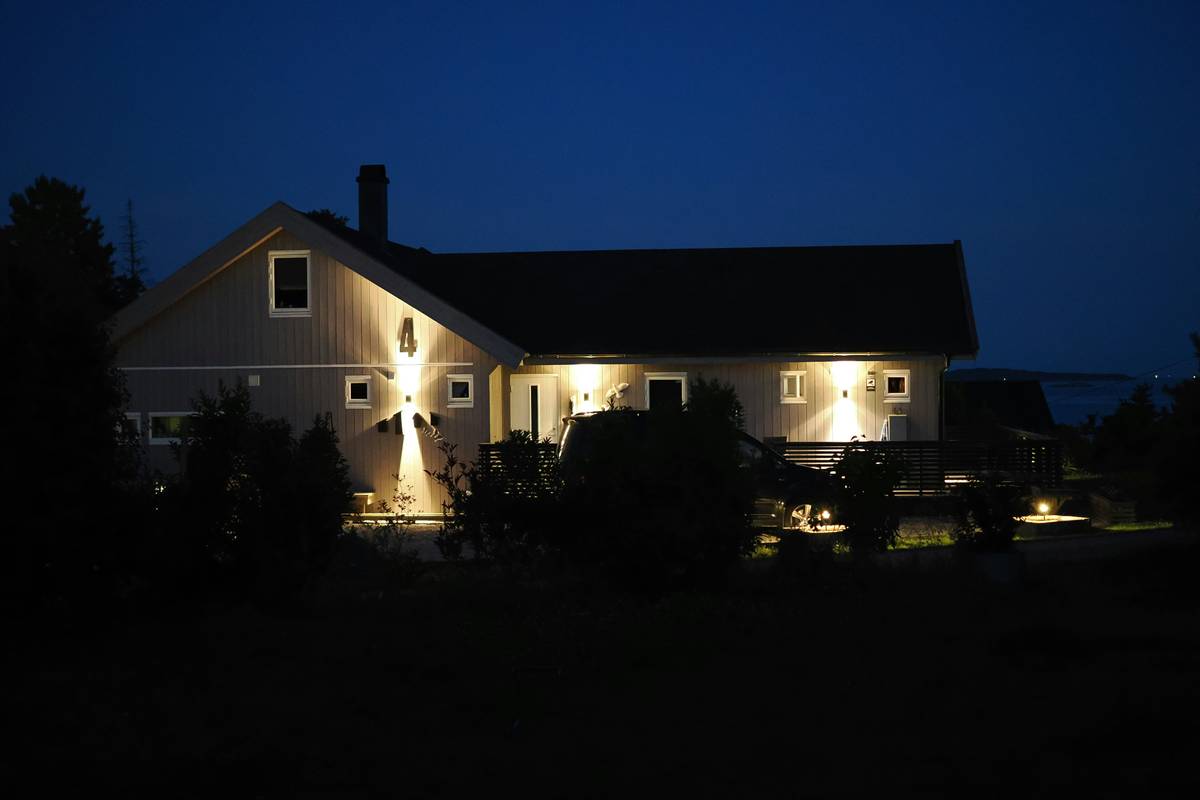
Use floodlights for wide areas (driveways, backyards), path lights for walkways, and wall-mounted sconces near entrances. Avoid downward-only fixtures; they create pools of light surrounded by darkness.
3. Install Motion Sensors Correctly
Mount sensors 7–10 feet high, angled slightly downward. Set sensitivity to ignore small animals but catch human movement. Pro tip: Test with a friend walking the perimeter before finalizing angles.
4. Go LED With Warm White (3000K–4000K)
Cool white (5000K+) feels clinical and creates harsh glare. Warm white offers better contrast for identifying faces and objects without blinding you.
Best Practices for Maximum Protection
- Layer your lighting: Combine ambient, task, and accent lighting to eliminate blind spots.
- Use timers or smart controls: Randomize on/off patterns when you’re away—predictable lighting screams “empty house.”
- Maintain regularly: Clean lenses and replace bulbs before they dim. A flickering light looks suspiciously like neglect.
- Avoid the “Christmas Tree” mistake: Over-lighting your whole yard makes it harder to spot actual movement. Focus on key entry points instead.
And here’s my pet peeve: those $20 “security” lights from big-box stores with plastic housings that crack in winter and sensors that trigger every time a leaf blows by. Save your cash—invest in IP65-rated, commercial-grade fixtures. Your safety isn’t a place to cut corners.
Real-World Results & Case Studies
In a 2022 study by the National Institute of Justice, neighborhoods that implemented coordinated outdoor lighting saw a 20% reduction in nighttime property crimes over 18 months. Locally, we retrofitted lighting for a Woodlands subdivision using layered motion-sensor LEDs. Within six months, residents reported zero attempted break-ins—a stark drop from the previous year’s eight incidents.
Another client replaced decorative lanterns with dusk-to-dawn LED wall packs aimed at their garage door and side gate. Not only did suspicious loitering stop, but their energy bill dropped by $12/month. True home security lighting tips deliver both safety and savings.
Frequently Asked Questions
What’s the best height to mount motion-sensor lights?
Between 7 and 10 feet. High enough to cover a wide field of view, low enough to detect torso-level movement reliably.
Do solar-powered security lights work?
Only in full-sun climates with long summer days. In cloudy or shaded areas, they often underperform. For critical zones, hardwired LEDs are more dependable.
Should security lights stay on all night?
No—constant lighting causes “light fatigue,” where neighbors and passersby ignore it. Motion activation or smart scheduling is far more effective.
Can proper lighting really deter burglars?
Absolutely. A Security Journal survey found 60% of convicted burglars avoid homes with visible, active security lighting. It’s one of the simplest deterrents you can install.
How do I choose between warm and cool white LEDs?
Stick to 3000K–4000K (warm to neutral white). It renders skin tones and clothing colors accurately—critical if you need to describe someone to police.
Where can I get professional help with installation?
If you’re in The Woodlands area, our team at Electrician Woodlands specializes in code-compliant, strategic lighting setups. We’ve helped hundreds of homeowners sleep easier—and you can read about our approach on our About Us page. All projects comply with local electrical codes and our strict privacy standards, as outlined in our Privacy Policy.
Remember: light isn’t just illumination—it’s your first line of defense. Get it right, and you don’t just brighten your yard… you banish the shadows where trouble hides. Now go flip the switch—on safety.