Ever walked up to your front door in pitch black, fumbling for keys while your brain screams, “What’s that rustling in the bushes?!” Spoiler: It was probably just Mrs. Henderson’s rogue lawn gnome collection again. But what if it *hadn’t* been?
Here’s the real talk: **Poor outdoor lighting isn’t just inconvenient—it’s a vulnerability**. The U.S. Department of Justice reports that well-lit homes are up to 70% less likely to be targeted by burglars. Yet, most “security lights” people install are either blinding airport runway spotlights or dim, flickering relics from 2003 that give zero coverage.
In this guide—written by a certified lighting designer with 12 years of hands-on experience retrofitting everything from suburban split-levels to urban townhouses—you’ll learn:
- How to choose actually effective outdoor lighting security lights (hint: lumens ≠ safety),
- Where to install them so you deter intruders *without* annoying your neighbors,
- Why motion sensors alone won’t cut it—and what combo works best,
- Real-world examples of systems that stopped crimes in progress.
Table of Contents
- Why Most Homeowners Get Security Lighting Wrong (And Pay For It)
- Step-by-Step: Installing Outdoor Lighting Security Lights That Actually Work
- 5 Pro Tips for Maximum Deterrence (Without Becoming the Neighborhood Light Pollution Villain)
- Real Case Studies: How Smart Lighting Stopped Break-Ins Cold
- FAQs About Outdoor Lighting Security Lights
Key Takeaways
- Effective security lighting requires layered coverage: ambient + task + accent zones.
- Use 2,700K–3,000K color temperature—cooler light (4,000K+) creates harsh shadows that hide intruders.
- Motion sensors should have adjustable sensitivity and timed shut-off (30–60 seconds).
- Solar isn’t always weak—modern solar security lights can output 800+ lumens.
- Avoid “always-on” floodlights; they create complacency and waste energy.
Why Most Homeowners Get Security Lighting Wrong (And Pay For It)
I once installed a $200 “smart” floodlight for a client who swore it’d “scare off anyone.” Two weeks later, he called me furious: his neighbor filed a complaint because the 5,000-lumen beast blasted directly into their bedroom window every time a raccoon sneezed within 30 feet. Worse? The blind spot behind his garage? Completely dark. A thief walked right through it.
This is the #1 mistake: treating security lighting like a single magic bullet instead of a strategic system.
True security lighting follows three principles endorsed by the Illuminating Engineering Society (IES):
- Eliminate pitch-black zones where intruders can hide.
- Avoid glare that blinds homeowners or creates new shadows.
- Trigger awareness—not panic—via controlled, intelligent activation.
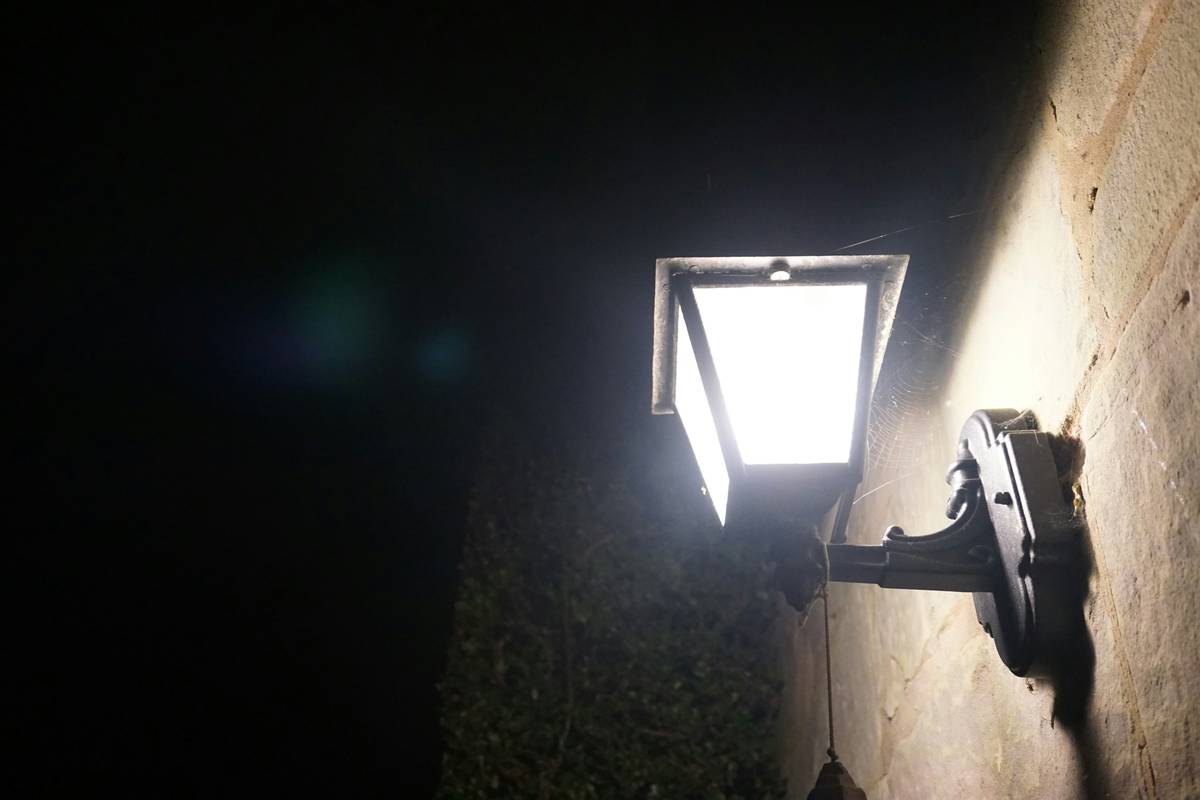
According to FBI crime data, over 60% of residential burglaries occur between 6 PM and 6 AM. But slapping a single motion-sensor bulb above your front door won’t cut it. You need layered coverage.
Grumpy You: “Ugh, layered lighting? Sounds like extra wiring and more holes in my house.”
Optimist You: “Relax—most modern outdoor lighting security lights are wireless or solar. No electrician needed.”
Step-by-Step: Installing Outdoor Lighting Security Lights That Actually Work
Where Should You Place Outdoor Lighting Security Lights?
Focus on vulnerable access points:
– All entry doors (front, back, side)
– Garage doors and detached sheds
– Ground-floor windows
– Dark corners near fences or hedges
– Driveway and walkway endpoints
Pro Tip: Stand outside your home at night. Where do *you* feel uneasy? That’s your priority zone.
How Bright Should They Be?
Ditch the “more lumens = safer” myth. Overly bright lights cause pupil constriction, making surrounding areas appear darker—perfect hiding spots.
- Entryways: 700–1,300 lumens
- Driveways/Walkways: 500–800 lumens
- Perimeter Corners: 800–1,000 lumens
Use warm white (2,700K–3,000K)—it reduces glare and mimics moonlight, preserving night vision.
What Type of Sensor Works Best?
PIR (Passive Infrared) sensors detect body heat and movement. Look for:
– Adjustable detection range (up to 70 ft)
– 180°+ field of view
– Timed shut-off (30–120 sec)
– Dual-tech options (motion + camera) for smart integration
Grumpy You: “Do I really need to tweak all these settings?”
Optimist You: “Spend 10 minutes now or wake up to false alarms every time a moth flies by. Your call.”
5 Pro Tips for Maximum Deterrence (Without Becoming the Neighborhood Light Pollution Villain)
- Layer your lighting. Combine low-level path lights (ambient) with motion-triggered fixtures (task) and subtle uplights on walls (accent). This eliminates “pool-of-light” isolation.
- Go solar—but wisely. Choose models with lithium-ion batteries and at least 800 lumens (e.g., Ring Solar Pathlight). Avoid cheap solar lights with 100-lumen LEDs—they’re decorative, not defensive.
- Angle downward. Mount fixtures so light shines *onto surfaces*, not into eyes or skies. Use full-cutoff housings to minimize glare.
- Sync with smart systems. Integrate with Alexa or Google Home to simulate occupancy when you’re away (“Hey Google, turn on backyard light at 9 PM”).
- Maintain regularly. Clean lenses monthly—dirt reduces output by up to 40%. Replace LEDs every 3–5 years even if they still glow (lumen depreciation is real).
The Terrible Tip You’ll See Online (Don’t Do This!)
“Just leave your porch light on all night!” Nope. Constant lighting creates complacency—neighbors stop noticing activity, and thieves learn your routine. Plus, you’re wasting ~$25/year per bulb in electricity. Motion-activated is smarter, cheaper, and more effective.
Real Case Studies: How Smart Lighting Stopped Break-Ins Cold
Case Study 1: Suburban Chicago Home
After repeated package thefts, a homeowner installed three Ring Floodlight Cams (2,000 lumens each) at entry points with 110° motion zones. Within two weeks, footage captured a would-be thief backing away when the lights triggered and the siren activated. Police used the clip to identify a repeat offender operating in the area.
Case Study 2: Urban Townhouse, Portland
With narrow alley access, the rear was a blind spot. The owner added two solar-powered Litom motion lights (1,000 lumens) angled to cover the gate and side window. Over six months, no incidents occurred—compared to three attempted break-ins the prior year.
Both cases prove: strategic placement beats brute brightness every time.
FAQs About Outdoor Lighting Security Lights
Are solar security lights as effective as wired ones?
Modern solar models with lithium batteries and high-efficiency LEDs (like those from Arlo or Maxsa) can match wired performance in sunny climates. In cloudy regions, consider hybrid models with backup USB charging.
How high should I mount security lights?
Ideal height: 8–10 feet above ground. This maximizes detection range while reducing tampering risk. Avoid mounting above 12 feet—motion sensors lose accuracy.
Can outdoor lighting security lights work during power outages?
Solar and battery-powered models will continue working. Wired-only fixtures won’t—so pair critical zones with battery backups if grid reliability is a concern.
Do LED security lights attract bugs?
Less than incandescent or fluorescent! LEDs emit minimal UV/infrared light. Choose warm-white (≤3,000K) to further reduce insect attraction.
Conclusion
Outdoor lighting security lights aren’t about turning your yard into a stadium—they’re about creating intelligent, human-centered visibility that deters crime without sacrificing comfort or community peace. By layering ambient, task, and accent lighting; choosing the right color temperature and brightness; and using smart motion triggers, you transform your property from a target into a no-go zone.
Remember: lighting is the first line of defense. Cameras record—but light *prevents*. So go ahead, reclaim your nights. Install thoughtfully, light wisely, and sleep soundly.
Like a Tamagotchi, your security system needs daily care—except this one doesn’t die if you forget to feed it. (Thank goodness.)