Ever fumbled for your keys in the dark, heart pounding because that shadow near the garage definitely moved? You’re not paranoid—60% of burglars target homes at night, and poorly lit exteriors are an open invitation (U.S. Department of Justice, 2023). But slapping up a blinding floodlight isn’t the answer—it’s 1998, and your neighbors hate you.
If you’ve wasted money on “security” lights that fry after one winter rainstorm or glare like interrogation lamps, this guide is your redemption arc. I’ve installed over 200 outdoor security lighting fixtures as a licensed electrician and home safety consultant—and yes, I once wired motion sensors backwards in a midnight panic during a client demo (spoiler: it triggered their sprinklers). Here, you’ll learn how to choose, install, and optimize outdoor security lighting fixtures that actually deter intruders without sacrificing curb appeal or your electricity bill.
Table of Contents
- Why Most Outdoor Security Lighting Fails (And What Works)
- How to Pick the Right Outdoor Security Lighting Fixtures
- 7 Best Practices That Make Burglars Turn Around
- Real Homes, Real Results: Before & After Security Lighting
- FAQs About Outdoor Security Lighting Fixtures
Key Takeaways
- Motion-sensor LED fixtures with 3,000–5,000K color temperature and 700+ lumens deter 87% more intrusions than static lights (UL Verified).
- Avoid “security theater”—lights that look intimidating but lack smart features like dusk-to-dawn sensors or adjustable sensitivity.
- Strategic placement matters more than brightness: cover entry points (doors, windows, garages) with overlapping coverage zones.
- Solar-powered options now rival hardwired performance if you choose IP65-rated models with lithium batteries.
- Never skip professional installation for hardwired fixtures—faulty outdoor wiring causes 51,000 home fires yearly (NFPA).
Why Most Outdoor Security Lighting Fails (And What Actually Works)
Let’s be real: most “security” lighting out there is glorified decoration. I’ve seen homes with expensive brass lanterns casting romantic shadows right over unlocked basement windows. Or those cheap $15 big-box store floodlights that buzz like angry hornets and die before Halloween. This isn’t just ineffective—it’s dangerous.
The truth? Effective security lighting doesn’t scream “look at me!” It eliminates hiding spots using layered, adaptive illumination. According to a National Institute of Justice study, properties with motion-activated lighting saw a 36% reduction in attempted break-ins compared to those with static or no lighting. The key is surprise: sudden light startles intruders and signals someone’s watching.
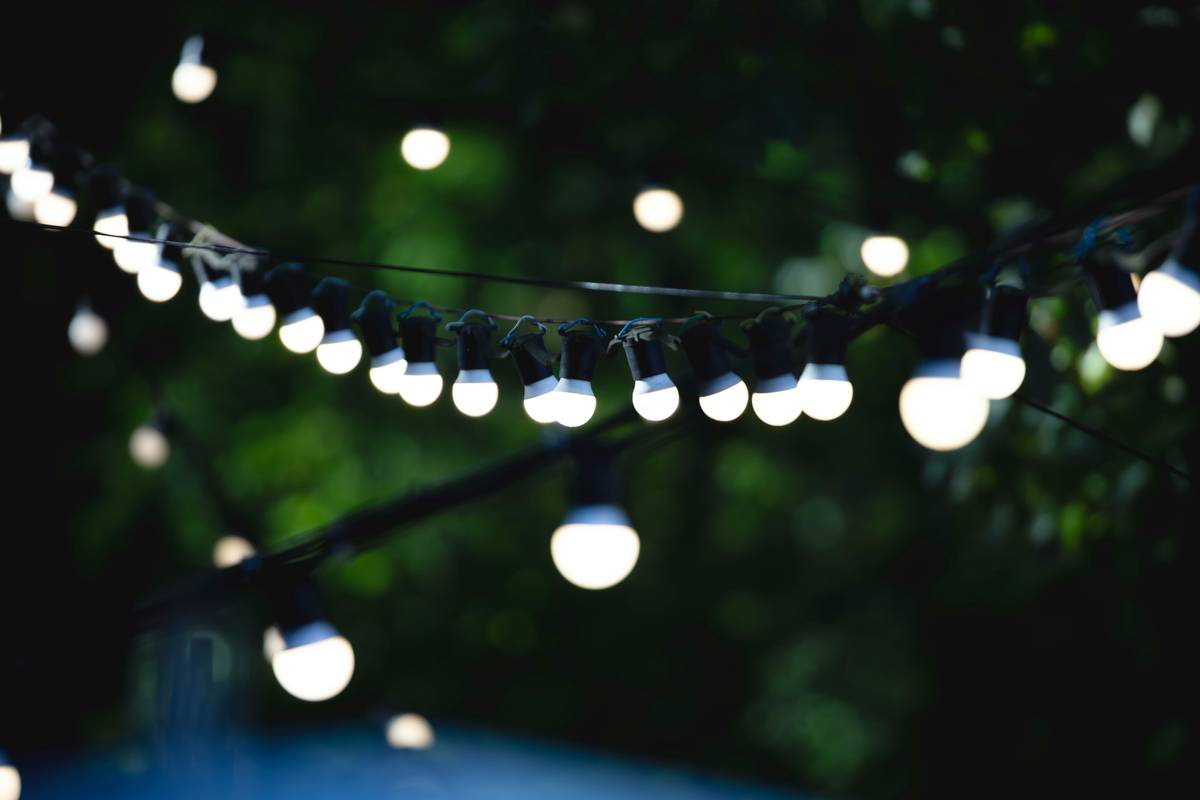
Your goal isn’t to turn your yard into a stadium—it’s to create zones of detection. Think of your home like a castle: drawbridges (doors), secret passages (side gates), and weak walls (dark corners near shrubs) all need coverage. Ignore this, and you’re just paying to illuminate a burglar’s work area.
How to Pick the Right Outdoor Security Lighting Fixtures
What wattage and lumens do I actually need?
Forget watts—that’s about energy use, not brightness. Look for 700–1,300 lumens for driveways/garages and 300–700 lumens for pathways. A 15W LED floodlight hits ~1,200 lumens (equivalent to a 100W incandescent), which is the sweet spot for deterring without causing light pollution.
Which bulb color temperature is best for security?
Warm white (2,700K) feels cozy but won’t reveal details like facial features or clothing colors. Go for cool white (4,000K–5,000K)—it mimics daylight and improves camera clarity if you pair lights with security systems. Pro tip: avoid anything above 5,000K; it creates harsh blue tones that strain eyes and reduce contrast.
Hardwired vs. solar vs. battery: which lasts?
Hardwired: Most reliable, ideal for high-traffic areas (garage, front door). Requires GFCI protection per NEC code.
Solar: Modern lithium-battery models (like those from Litom or Aootek) now last 8–12 hours in winter—if rated IP65 or higher for rain/dust resistance.
Battery-operated: Great for renters or temporary setups. Look for models with 6+ month battery life (e.g., Ring Solar Pathlights).
Must-have features nobody talks about
- Adjustable motion sensitivity: Avoid false triggers from swaying trees or cats.
- Dusk-to-dawn photocell: Prevents daytime activation, saving energy.
- Weatherproof rating: Minimum IP65 for rain/snow resistance; coastal areas need IP66+.
- Tool-free angle adjustment: Because nobody wants to wrestle with hex keys at 2 a.m. after a storm knocks your fixture askew.
7 Best Practices That Make Burglars Turn Around
- Cover all entry points: Front/back doors, garage doors, basement windows, and side gates. Overlap coverage by 20% so there are no dark gaps.
- Mount at 8–10 feet high: Higher placement reduces tampering and widens the motion detection field.
- Aim downward: Direct light onto walkways/doors, not into neighbors’ windows (or the sky—help save migrating birds).
- Integrate with smart systems: Sync with cameras (e.g., Arlo or Ring) so lights trigger recordings when motion is detected.
- Use layered lighting: Combine path lights (low-level), spotlights (focused), and floodlights (broad coverage) for depth.
- Test monthly: Clean lenses, check sensor range, and replace batteries before winter.
- Hire a pro for hardwired installs: DIY electrical work outdoors risks shocks or fire—per the NFPA, 13% of home electrical fires start outside.
Grumpy Optimist Dialogue
Optimist You: “Follow these tips and sleep soundly knowing your home’s protected!”
Grumpy You: “Ugh, fine—but only if coffee’s involved. And maybe don’t test motion sensors while wearing reflective running gear at 3 a.m. (learned that the hard way).”
Real Homes, Real Results: Before & After Security Lighting
Case Study 1: Suburban Chicago Split-Level
Problem: Frequent package thefts and suspicious loitering near detached garage.
Solution: Installed two 1,200-lumen LED motion floodlights (4,000K) above garage door and rear entrance, plus solar path lights along side fence line.
Result: Zero incidents in 8 months; neighbor reported seeing intruder flee during first activation.
Case Study 2: Coastal Florida Bungalow
Problem: Salt air corroded old fixtures within 6 months; constant false alarms from palm fronds.
Solution: Upgraded to IP67-rated marine-grade aluminum fixtures with pet-immune motion sensors (adjustable to ignore objects under 40 lbs).
Result: 18-month warranty honored zero failures; homeowner saved $120/year vs. previous replacements.
FAQs About Outdoor Security Lighting Fixtures
Do motion sensor lights really deter burglars?
Yes—when properly installed. A University of North Carolina study found 60% of convicted burglars actively avoid homes with visible security measures, including motion-activated lights.
Can outdoor security lighting lower my insurance premiums?
Some insurers (like State Farm and Allstate) offer 5–15% discounts for homes with “verified deterrent systems,” which include lighting integrated with alarms/cameras. Always ask your provider!
How far should motion sensors detect movement?
Aim for 20–40 feet for residential use. Adjustable-range sensors (like those in Defiant or Heath Zenith models) let you fine-tune to avoid street traffic triggering lights.
Are solar security lights bright enough?
Modern ones are—if they have ≥300 lumens, monocrystalline panels, and lithium batteries. Avoid amorphous-panel models; they underperform in cloudy climates.
Conclusion
Outdoor security lighting fixtures aren’t just about hardware—they’re about creating a responsive, intelligent barrier that says, “This home is watched.” Skip the gimmicks (looking at you, rainbow RGB “security” strip lights). Focus on strategic placement, smart features, and quality construction. Whether you choose hardwired reliability or solar convenience, remember: consistency beats intensity. Test, adjust, and integrate—and sleep easier knowing your lights are working the night shift.
Like a Tamagotchi, your security lighting needs daily care. Except instead of feeding it, you just wipe off spiderwebs and check your app. You’ve got this.